
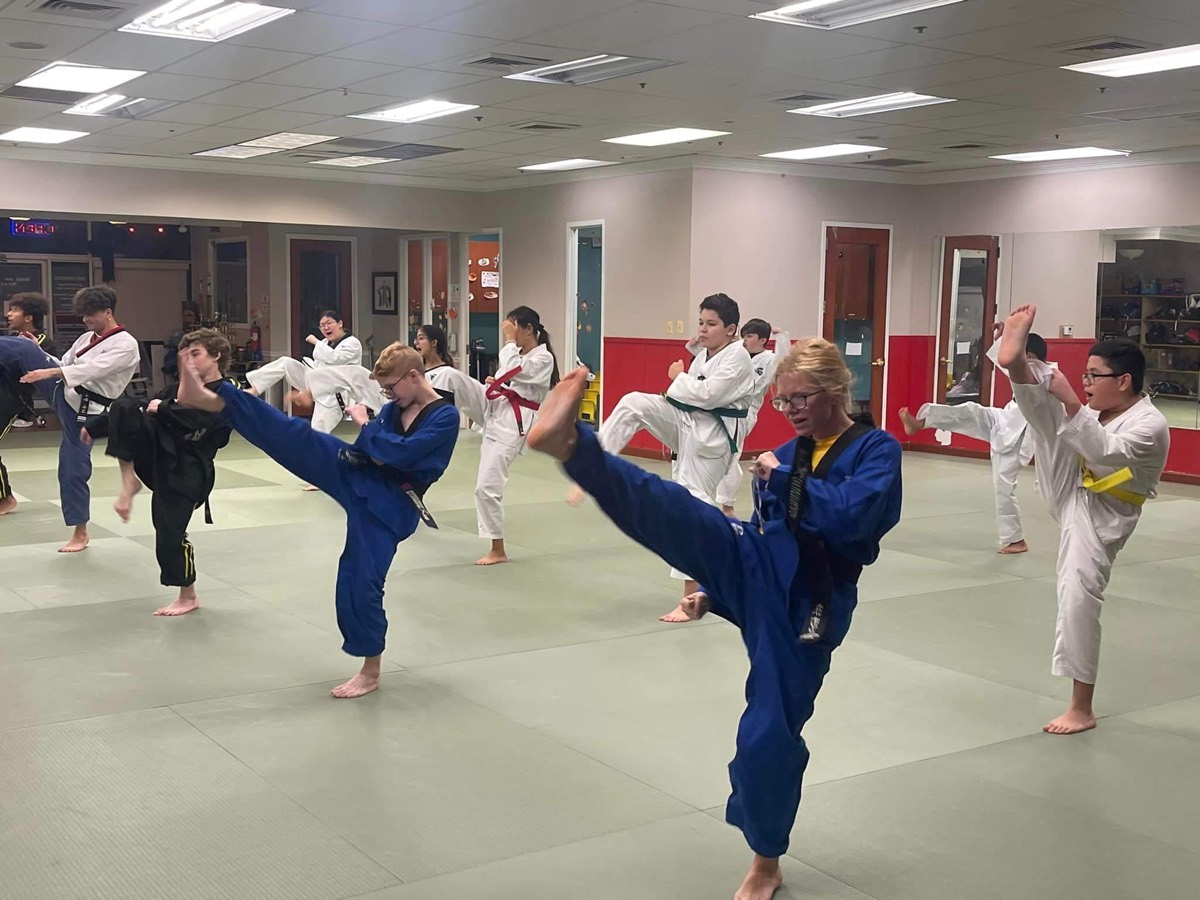
Your child is ready for martial arts class when they can follow a few simple directions, handle short waits without melting down every time, and recover from small frustrations. Age matters less than readiness. A good test is what we call the “three R’s”: ready to listen, ready to try, and ready to reset after a mistake. If you’re wondering about the best age to start martial arts for a child, this framework is what I use with parents in our lobby every week.
Most parents aren’t asking, “Can my kid kick?” They’re asking, “Will my kid fall apart on the mat?” That’s the real question. And it’s the right one.
The real problem isn’t age. It’s mismatched expectations.
A lot of advice online makes it sound like readiness is a birthday. Turn four, start martial arts. Turn six, they’re “better.” Real life is messier.
The most common misdiagnosis I see is this: a parent thinks their child needs more confidence or discipline, when the child really needs a class format that fits their attention span and their nervous system. Kids don’t “fail” martial arts. A class can be the wrong size, too long, too loud, or too lecture-heavy.
Child development also isn’t linear. The same child can be calm at swim lessons and explode in a group class after school when they’re hungry and overstimulated. If that sounds familiar, you’re not alone. The American Academy of Pediatrics’ guidance on development and behavior is a good reminder that skills like self-control and attention build over time, and unevenly from child to child (HealthyChildren.org guidance from the American Academy of Pediatrics).
Here’s the simplest way to think about it: martial arts is a class first, and a sport second.
If your child can participate in a short group lesson at school or library storytime, they’re often closer to ready than you think.
Use the “3 R’s” to spot readiness in a normal week
Action: watch for ready to listen, ready to try, and ready to reset, then test them in low-stakes moments at home.
R #1: Ready to listen (for 30 to 60 seconds)
This doesn’t mean perfect attention. It means they can look up, hear you, and attempt what you asked.
- They can follow 1-step directions like “shoes on,” “hands to self,” “stand here.”
- They can copy simple motions when you demonstrate (even if it’s sloppy).
- They can handle a short explanation without bolting across the room.
A practical home test: set a timer for 45 seconds and teach them something tiny, like how to stand with feet together and hands at their sides. If they can try that for under a minute, they can often handle the “line up” and “eyes on me” moments in class.
Attention span changes fast in early childhood. If you want a development-based benchmark, the CDC’s “Positive Parenting Tips” by age lays out typical ranges for attention, following directions, and self-control (the CDC’s Positive Parenting Tips).
R #2: Ready to try (even when it’s new)
Martial arts is full of unfamiliar things: a uniform, new words, bowing, group counting, someone correcting your stance. The child who’s ready doesn’t have to love new things. They just need to tolerate them.
- They’ll attempt a new activity if an adult guides them through the first minute.
- They can be near other kids without constant conflict.
- They can accept a correction like “feet apart” without taking it as an insult.
One of the best signs is curiosity after hesitation. “I don’t know…” followed by “Can I try?” is gold.
For a broader look at how kids respond to challenge and feedback, the American Psychological Association’s parenting resources have useful, plain-language notes on building coping skills and resilience (APA parenting resources).
R #3: Ready to reset (after mistakes, bumps, or “no”)
This is the big one. Kids fall, miss targets, forget steps, and get tagged in safe drills. Readiness shows up in recovery.
- They can calm with help within a few minutes after getting upset.
- They can rejoin an activity after a small disappointment.
- They don’t need to “win” every game to stay regulated.
If you’re thinking, “My child melts down over the wrong color cup,” that doesn’t automatically mean “not ready.” It means you should choose a beginner program with short segments, lots of structure, and clear transitions.
Sleep and hunger make or break reset skills. The CDC’s sleep guidance for children shows how strongly sleep relates to mood and attention (the CDC’s sleep guidance by age).
A quick checklist you can score in 5 minutes
Action: score what you’re already seeing, then pick the class type that matches the score, not the birthday.
This is the front-desk version of readiness. No psychology terms. Just what we can observe.
- Can they stay with a group for 30 minutes without leaving the area more than once?
- Can they take turns without grabbing or shouting most of the time?
- Can they follow “stop” quickly when an adult says it?
- Can they keep hands to themselves when excited?
- Can they handle a loud “kihap” yell from other kids without panicking?
- Can they separate from a parent for 30 minutes (even if they complain at first)?
Now score it:
- 5 to 6 yes answers: ready for a standard beginner kids class.
- 3 to 4 yes answers: ready, but choose a shorter, more structured beginner format if possible.
- 0 to 2 yes answers: wait a bit or start with private lessons, or pick a program designed for younger kids.
That’s it. No guilt either way.
And here’s my unhedged opinion: do not start a child in a “harder” class to force discipline. It backfires more often than it helps.
Pick the right class format (this matters more than the style)
Action: match your child to the class environment, not the martial art label.
Parents often ask about Taekwondo vs karate vs “mixed martial arts.” For readiness, the format is the real lever: class length, class size, noise level, and how the instructor manages transitions.
| What your child needs | Better fit | What to avoid (for now) |
|---|---|---|
| Short attention span, high energy | 30-40 minute class with many short segments and clear lines | 60-minute class with long lectures and waiting |
| Shy or slow to warm up | Predictable routine, same opening/closing every time | Constantly changing games and surprise partner switches |
| Big feelings, struggles with frustration | Instructor who normalizes mistakes and uses quick resets | High-pressure sparring focus early on |
| Sensory sensitive (noise, touch) | Smaller class, clear personal space rules | Overcrowded room with lots of contact drills |
If you’re comparing schools, ask these plain questions:
- How long is the beginner class, and how many kids are typically in it?
- What happens if a child needs a 30-second break?
- How do you teach safety rules like “stop,” “freeze,” and personal space?
- When does sparring start, and what does “sparring” mean in your program?
Also, it’s reasonable to ask about instructor training and background. For Taekwondo specifically, recognized bodies include Kukkiwon (World Taekwondo Headquarters) and USA Taekwondo (Kukkiwon, USA Taekwondo).
What “ready” looks like in the first month (so you don’t panic)
Action: look for small, boring wins, not perfect behavior.
Week one is often clumsy. That’s normal. New room, new rules, new sounds.
Here are the progress markers I’d rather you watch:
- They can stand in line for 10 seconds longer than last class.
- They start copying the group without you prompting.
- They learn one routine piece, like bowing in and out.
- They recover faster after a correction.
- They talk about class later in the day, even if they complained in the car.
If your child cries the first class but walks back in the second class, that’s a win.
If they’re tired and touchy after class, that can also be normal. Physical activity and lots of listening takes work. The CDC’s physical activity guidance for kids explains the general targets and benefits, but it also hints at the obvious truth parents live with: activity affects sleep and mood, especially when routines are new (CDC guidance on physical activity for children).
When the standard advice doesn’t apply (and you should slow down)
Action: pause and ask for a plan if you’re seeing safety issues, panic, or repeated refusal, not just normal nerves.
Most kids can start before they’re “perfect.” Some situations need more care.
Consider waiting, or starting with a smaller setting, if:
- Your child regularly runs out of the room when upset and won’t stop when called.
- They hit, bite, or throw objects when frustrated, not once, but as a pattern.
- They have panic-level fear of loud voices, being watched, or being separated from you.
- They can’t tolerate gentle correction from adults outside the family.
This isn’t a moral judgment. It’s about safety and stress.
If your child has ADHD, autism, anxiety, or sensory processing differences, martial arts can still be a great fit. But the “best” start often looks different: shorter lessons, smaller classes, more visual cues, and predictable routines. If you’re coordinating with a pediatrician or therapist, it can help to share what the class requires: group listening, quick stops, partner distance, and mild contact drills later on.
For a credible overview of ADHD basics and support, the CDC’s ADHD resource hub is a solid starting point (CDC information on ADHD).
One more exception that surprises parents: if your child is dealing with bullying at school right now, don’t assume a martial arts class will instantly fix it. A good program can help, but in the first weeks your child is still learning the rules, not winning conflicts. Stopgap safety planning should involve school staff too (StopBullying.gov guidance).
How to try a first class without turning it into a stress test
Action: set up the first class like a dentist visit you want to go well. Simple prep, calm tone, clear expectations.
Here’s what works with nervous kids:
- Feed them 60 to 90 minutes before class. Not candy. Real food.
- Arrive 10 minutes early so they can see the room before it fills up.
- Use one simple script: “Your job is to listen, try, and be respectful.”
- Don’t bargain in the parking lot. Say goodbye clearly and let the instructor coach.
- After class, ask one question: “What was one thing you learned?” Not “Did you like it?”
If your child is four or five, bring a water bottle they can open themselves. Small independence reduces mid-class panic.
Also, clothing matters. If the school provides a uniform later, great. For day one, plain athletic clothes usually work better than jeans or a dress. Kids get distracted when they can’t move comfortably.
In our Northern Virginia schools at Dynamic Kick Martial Arts (we’ve been running family Taekwondo programs since 2000), the youngest beginner groups are built around short attention spans on purpose. We’d rather a child succeed in small steps than struggle through a long hour.
What to do next if you’re still unsure
Pick one thing to test this week: listening, trying, or resetting.
If “listening” is the weak spot, practice 45 seconds of stillness once a day, then praise the attempt. If “trying” is the weak spot, practice doing new things in tiny doses, like a new playground or a new game. If “resetting” is the weak spot, build a predictable calm-down routine: water, three deep breaths, then back to the task.
Then visit a class and watch how the instructor handles mistakes. That’s where you’ll see whether it’s a fit.
Sources
- HealthyChildren.org guidance (American Academy of Pediatrics)
- the CDC’s Positive Parenting Tips (Centers for Disease Control and Prevention)
- APA parenting resources (American Psychological Association)
- the CDC’s sleep guidance by age (Centers for Disease Control and Prevention)
- Kukkiwon (Kukkiwon, World Taekwondo Headquarters)
- USA Taekwondo (USA Taekwondo)
- CDC guidance on physical activity for children (Centers for Disease Control and Prevention)
- CDC information on ADHD (Centers for Disease Control and Prevention)
- StopBullying.gov guidance (StopBullying.gov, U.S. Government)