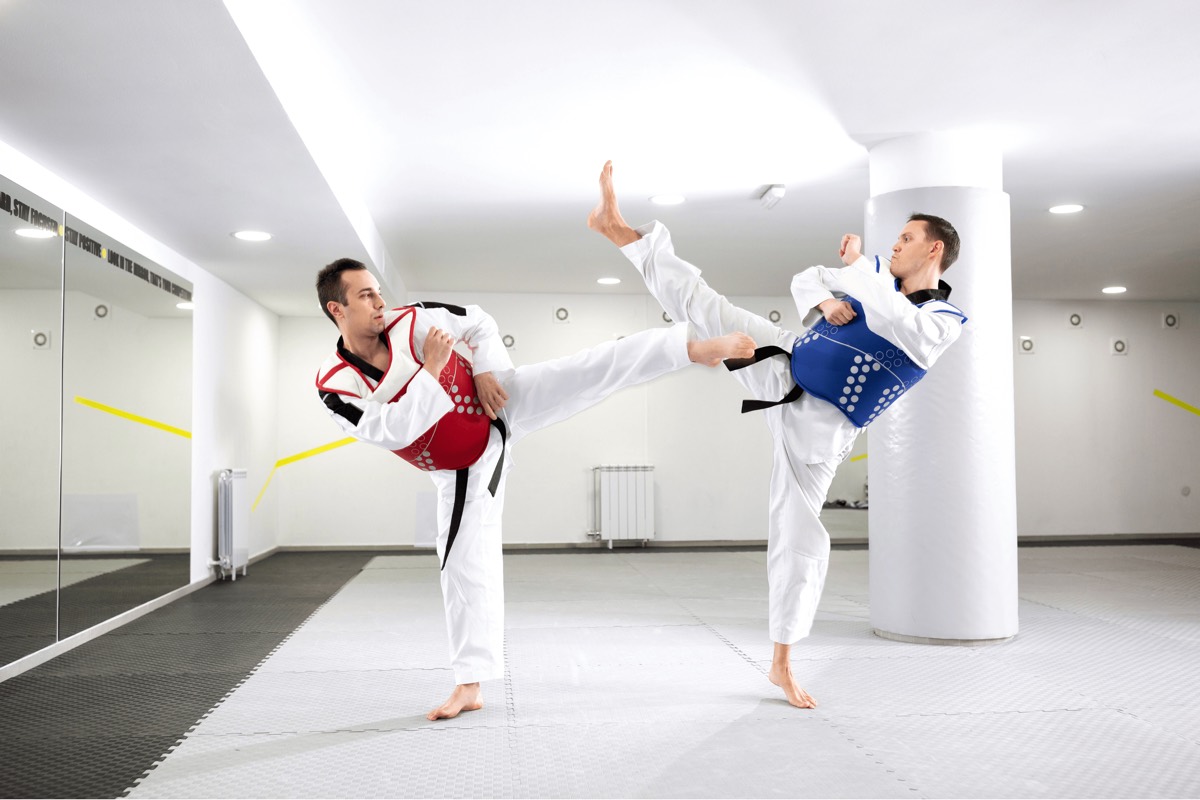
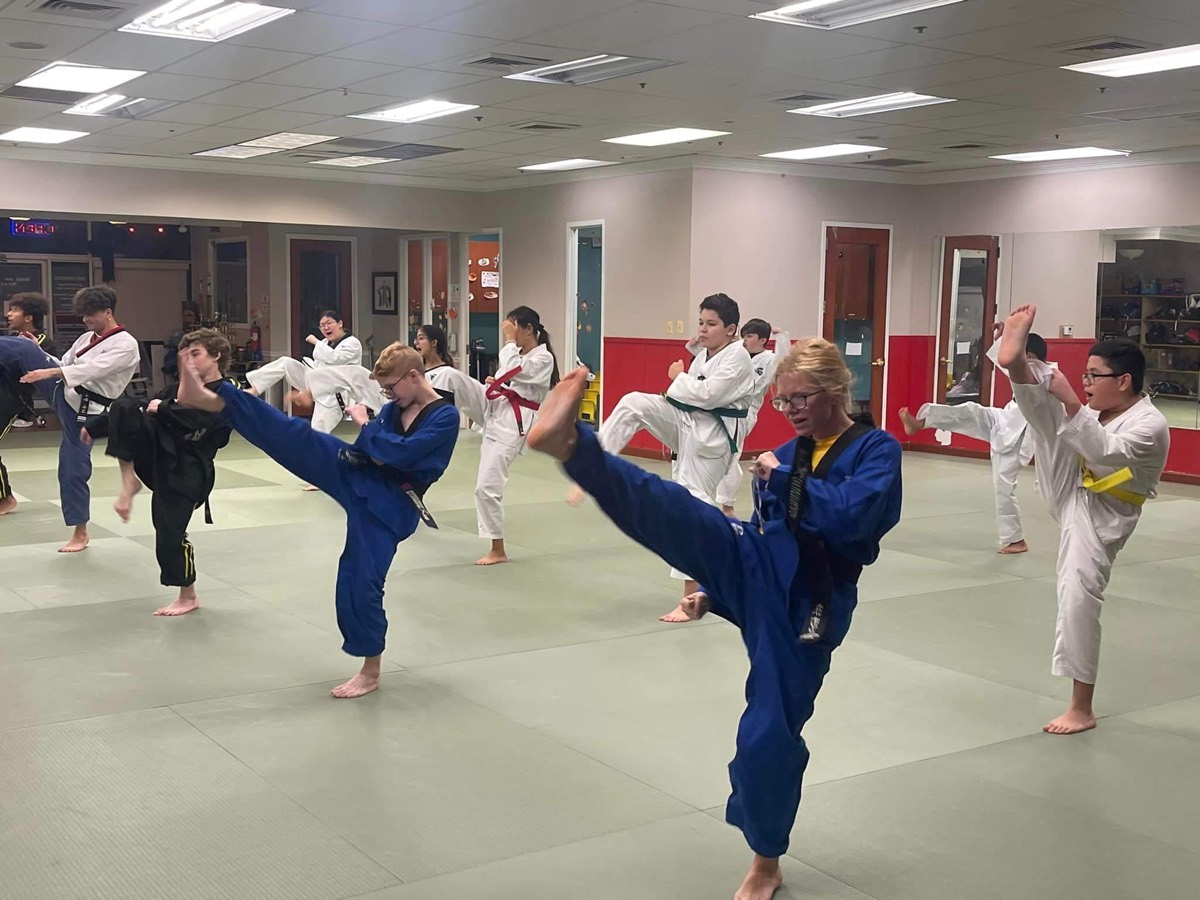
Most people earn a Taekwondo black belt in years, not months. The real timeline depends less on “natural talent” and more on attendance, coaching standards, and whether the student can keep improving the basics instead of rushing past them. Our blunt take: if a school can’t explain what its black belt means and how it’s measured, the timeline is the wrong question.
How long does it take to earn a black belt in Taekwondo
For most students, earning a black belt takes consistent training over multiple years. That’s the honest range you should plan for, even though the exact number will vary by school and by student.
Why the range is wide is simple. Different schools use different standards, different testing requirements, and different expectations for what “black belt level” looks like. Even within one school, two students who start the same week can progress at different rates because their attendance, focus, and follow-through aren’t the same.
If you’re a parent asking for your child, the timeline is also shaped by maturity. A child who can listen, follow directions, and reset after a mistake will usually progress more smoothly than a child who fights every correction.
One more reality check: a black belt isn’t a finish line. It’s a level of skill and understanding, and it’s also the start of more serious learning.
A real-world baseline from our schools (first-party context)
Because “multiple years” can still feel vague, here’s how we talk about it at Dynamic Kick Martial Arts in Northern Virginia (Gainesville, Fair Lakes, Lansdowne, Lorton, and Kings Park West), where we’ve been teaching since 2000.
We don’t publish a one-size-fits-all promise because readiness matters, not marketing. But as a practical planning baseline, students who attend steadily (most weeks, not “when life allows”) and keep their fundamentals moving forward typically think in terms of years to reach 1st Dan black belt level, not a quick sprint. When families ask us “how long does it take to earn a black belt,” we usually reframe it as: “How many solid training weeks can you stack without long gaps?” That’s what actually predicts the timeline in the real world.
If you want the most honest estimate for your situation, ask any school (including us) this: “What does a typical week of training look like for students who reach black belt on schedule here?” The answer tells you more than a number.
For context, if you’re comparing credentials, Kukkiwon is the body that issues official Taekwondo Dan and Poom certificates through its promotion and certificate issuance system, as described on Kukkiwon’s official site. That doesn’t tell you how long it takes, but it does help you understand what “counts” as a recognized credential in that system.
What factors actually decide how fast someone reaches black belt level
The biggest drivers are training frequency, coaching standards, and how well the student keeps sharpening fundamentals. Athletic ability helps, but it’s not the main thing.
Attendance is the multiplier
Skills fade when there are long gaps. A student who trains steadily usually needs less re-teaching, less warmup time to “remember,” and less emotional friction around testing. That adds up over months.
If you want a practical way to think about it, track weeks trained, not calendar months. Two people can both “train for a year,” but if one shows up most weeks and the other disappears for chunks of time, they did not train the same year.
Another detail most articles skip: “attendance” isn’t just how often you show up. It’s whether you regularly train through the unglamorous weeks where you’re fixing stance, chamber, hip rotation, guard, and balance. Those are the weeks that quietly determine whether the black belt test feels doable later.
Standards matter more than slogans
Not every black belt means the same thing. Some programs test lightly and often. Others hold students longer until technique, control, and consistency match the level.
If a school follows Kukkiwon certification, it’s useful to understand the terms. Kukkiwon issues both Poom and Dan certificates through its system, which you can see reflected in its official services for examinations and certificate issuance on Kukkiwon. That’s the credential side.
But skill is still earned on the mat. A certificate doesn’t guarantee ability, it documents that a student met the standard used in that testing environment.
If you’re comparing schools, ask how they evaluate: forms (poomsae), basic technique, sparring, self-defense, breaking, and conditioning. The more clearly a school can explain what it tests and why, the more meaningful its timeline tends to be.
Fundamentals are the long pole in the tent
Most students don’t stall because they can’t learn a new kick. They stall because their stance, balance, guard, timing, and control are inconsistent under pressure.
That’s why good instruction can look “slow” from the outside. A careful school will make students repeat basics until they’re reliable.
At our locations, the students who progress most smoothly are rarely the ones who “collect techniques.” They’re the ones who keep cleaning up the same fundamentals until they look the same on a good day and a bad day. That consistency is what black belt level actually looks like.
What should a black belt mean and how can you tell if a school treats it seriously
A black belt should mean the student can perform core techniques with control, can follow instruction, can apply basics in structured sparring or drills, and can keep composure while being corrected. You should be able to see that in class, not just hear it in marketing.
Here are concrete signs we’d look for as parents, even if we weren’t instructors.
- Testing has clear requirements. You can ask what gets evaluated, and the answer isn’t vague.
- Students show control. Kicks stop where they’re supposed to stop, and partners look safe.
- Instructors correct details, not just effort. You hear specific coaching, not constant cheering.
- There’s a culture of respect. Kids can line up, listen, and reset quickly after mistakes.
- Progress looks earned. Some students test, some wait, and nobody pretends it’s “all the same.”
A simple question that cuts through sales talk
If you’re trying to figure out whether a black belt timeline is meaningful, ask: “If a student isn’t ready for their next promotion, what happens?”
A serious program can answer this without defensiveness. You’ll hear something like: they wait, they get specific feedback, they retest later, and the instructor can explain what “ready” looks like in measurable terms (control, consistency, composure, and clean fundamentals).
If you care about recognized certification, ask directly what organization the school uses for black belt certification, and what that certification represents. Kukkiwon is widely known as the World Taekwondo Headquarters, and it issues official Dan and Poom certificates, including Poom for under-15 black belt holders, as explained in the background section on Wikipedia’s Kukkiwon overview. The key point for parents is that Poom is a recognized child black belt credential in that system, not a “fake” black belt.
We’ll say one opinion plainly because most articles dodge it. A black belt timeline that sounds too good to be true usually is.
Does a child’s age change how long it takes to earn a black belt
Yes. Age affects attention span, emotional control, and how well a child can handle correction, and those traits shape progress.
With younger kids, you’re often building the ability to participate before you’re building advanced technique. That’s not a flaw, it’s normal development. It can also be a good thing because it means the early months teach basics like lining up, listening, and trying again after a mistake.
But kids also grow fast. Coordination changes. Focus changes. Confidence changes. That can speed up learning later, even if the first stage looked slow.
Sleep matters here, too. When kids are short on sleep, attention, mood, and learning all get harder. The CDC’s sleep duration guidance gives age-based targets, and while we’re not giving medical advice, it’s a helpful reference for families who notice that a tired child struggles in class.
How do adult black belt timelines differ from kids
Adults often learn faster at first because they can listen, self-correct, and practice with purpose. Adults also hit different obstacles, like busy schedules and slower recovery after hard sessions.
Adults usually want to know what to do at home. The answer is boring, but it works: practice the basics your instructor assigns, for short blocks, with full attention. Ten focused minutes beats forty distracted minutes.
Adults also benefit from strength and mobility work, but only if it supports training instead of replacing it. The American College of Sports Medicine’s general guidance on strength training basics is a good reference point for safe, mainstream training principles, including frequency and progression, in its position stand on resistance training: American College of Sports Medicine resistance training position stand (PubMed).
We teach adults in a dedicated program, and if you want to see what that looks like in Northern Virginia, our overview is here: Adult Taekwondo.
What slows people down most often, even when they train hard
The most common slowdowns are inconsistent attendance, rushing technique, and treating testing like the goal instead of skill. These aren’t character flaws, they’re predictable traps.
Inconsistent training
People underestimate how much “relearning” happens after a break. A student may feel like they’re working hard, but the body is spending the first part of every class catching up.
Chasing new material before basics are solid
New techniques are fun. Basics are where progress happens.
When students chase novelty, they often build a stack of half-learned skills. Then they hit a wall because the foundation can’t support the speed and control needed at higher ranks.
Nerves and performance under pressure
Some students look sharp in class, then freeze in a test. That’s normal. Testing is a different environment, and nerves change breathing, timing, and memory.
In our experience, the fix is not “more hype.” It’s more practice under mild pressure, more repetition, and more familiarity with the test format.
How can you compare two schools’ black belt timelines without getting misled
Compare standards and structure first, then compare timelines. A shorter timeline is not automatically better, and a longer timeline is not automatically stricter.
| What to compare | What to ask | What a good answer sounds like |
|---|---|---|
| Testing requirements | What skills are evaluated at each test | Clear items like forms, basic technique, sparring drills, and control |
| Standards | What happens if a student isn’t ready | Sometimes students wait, and instructors explain what to improve |
| Credentialing | Who issues black belt certification | A specific organization, and what that certificate represents |
| Training culture | How instructors correct and manage safety | Specific coaching, controlled partner work, respect on the mat |
If you’re looking at Kukkiwon certification in particular, start with primary sources. Kukkiwon itself describes its certification and services on its official site. Then ask the school how it handles the training standards that lead up to that credential.
A local comparison tip that actually works
If you’re visiting schools around Northern Virginia, ask to watch an intermediate class and a black belt class (not just an intro class). The timeline question becomes obvious when you see the baseline quality of movement, control, and coaching. At Dynamic Kick Martial Arts, you can do this at any of our five locations (Gainesville, Fair Lakes, Lansdowne, Lorton, and Kings Park West), and you’ll get a clearer answer than any generic “X years to black belt” claim.
If you want to compare options locally, our schools are in Gainesville, Fair Lakes, Lansdowne, Lorton, and Kings Park West, and the simplest starting point is our Locations page.
What should you do next if you’re trying to plan for a real timeline
Pick a school you trust, commit to steady attendance, and measure progress by skill, not calendar. If you do those three things, the timeline usually takes care of itself.
Also, give it a few weeks before you judge whether it’s “working.” Early classes are often about learning the rules of the room, how to stand, how to move, and how to pay attention. That’s real progress, even if it doesn’t look like fancy kicking yet.
If you want one practical “planning” tool, set a 90-day goal instead of a black belt goal. Show up consistently for three months, track how often you actually trained, and ask your instructor what the next fundamentals to improve are. That’s how you build a real timeline without getting trapped by hype.
If you’re in Northern Virginia and want to see what a class feels like in person, we offer a free first class for new students of any age. You can book it here: Free trial class.
Sources
- Kukkiwon official site, Kukkiwon
- Wikipedia’s Kukkiwon overview, Wikipedia
- CDC’s sleep duration guidance, Centers for Disease Control and Prevention
- American College of Sports Medicine resistance training position stand (PubMed), PubMed
- USA Taekwondo, Team USA
- World Taekwondo, World Taekwondo