
Wear simple workout clothes you can move in: a T-shirt and athletic pants or shorts, plus a water bottle. Skip jeans, skirts, and anything with zippers or sharp bits. Bare feet are normal on the mat. If the school gives you a uniform later, you can wait. For day one, clean, comfortable, and safe wins.
Here’s the part most articles miss: the “right” outfit isn’t about looking like you belong. It’s about not creating problems on the floor. Grip, heat, and scratchy hardware matter more than style.
The real problem isn’t the uniform. It’s the fear of being the only one who’s “wrong.”
If you’re here because you’re nervous (or your kid is), you’re not alone. Most first-timers aren’t worried about kicks. They’re worried about walking in wearing the one thing that makes them stick out.
What causes that worry is simple: martial arts has visible traditions. Belts. Bare feet. Bowing. It can feel like there’s a secret dress code everyone else knows.
There isn’t.
On a good first day, an instructor expects new students to show up in regular athletic clothes. Uniforms are usually handled after you’ve tried a class or two and decided it’s a good fit. The only “wrong” choice is clothing that makes training unsafe or uncomfortable.
If you want to sanity-check any school’s etiquette expectations, it’s fine to ask. Many gyms post basic policies online, and a lot of those policies track common safety standards like removing jewelry and keeping nails trimmed. For a general look at why gym and sport settings focus on injury prevention basics, see the CDC’s injury prevention resources.
Do this first: wear plain athletic clothes with no hardware
Choose clothes that stretch, breathe, and don’t scratch anyone.
That’s the whole goal for day one.
Best simple outfit (kids and adults)
- T-shirt or athletic top (not oversized enough to cover your face when you raise your arms)
- Athletic pants or shorts (think sweatpants, joggers, leggings, basketball shorts)
- Underlayers that stay put (sports bra, undershirt, fitted tank) if you want extra coverage
Why this works: most beginner classes include basic stepping, knee lifts, light kicks, and simple partner drills. You need fabric that moves with you, not against you. If you’ve ever tried to do a high knee in skinny jeans, you already know.
One specific “no” we see a lot: zip-up hoodies and jackets. Zippers scratch. Pockets catch fingers. Hood strings whip around and get stepped on. Skip them.
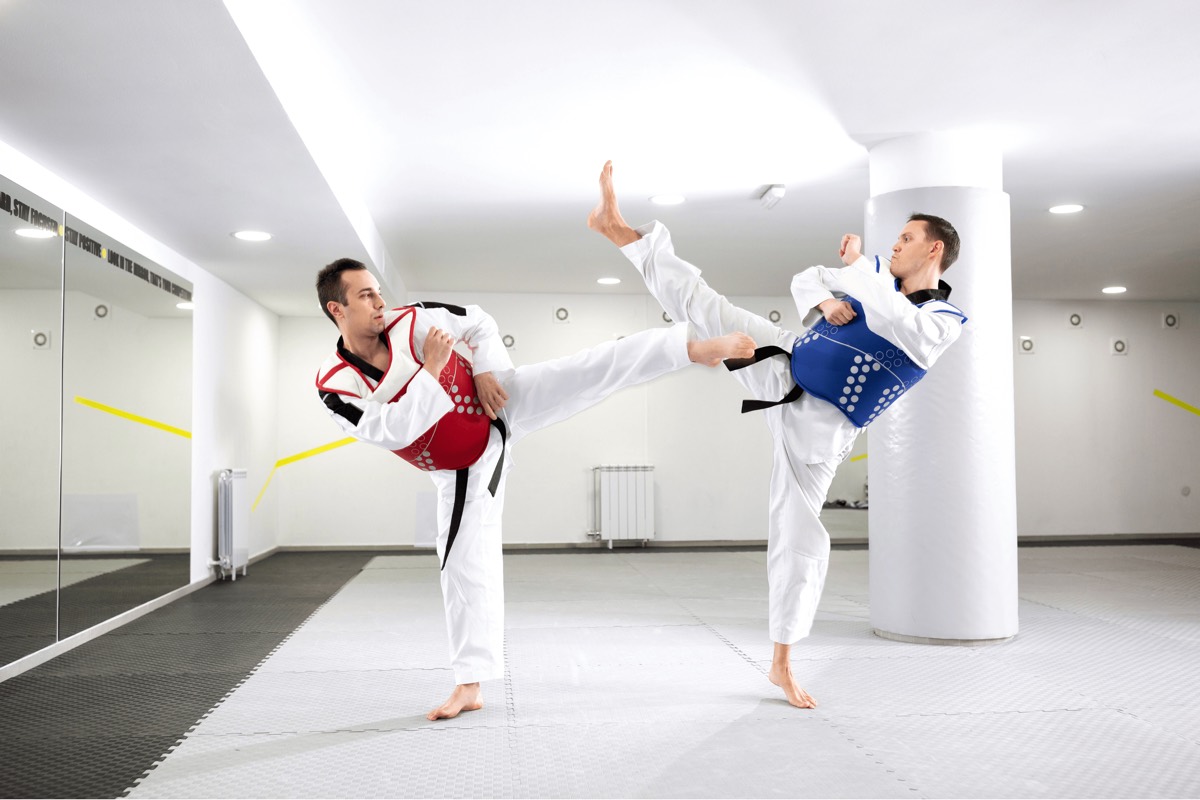
If you want a good mental model, think “PE class,” not “costume.” Schools that use a uniform (like a dobok in Taekwondo) typically introduce it after your first class or once you enroll. If you’re still deciding whether this is the right activity, it can help to understand the best age to start martial arts for your child.
What about shoes?
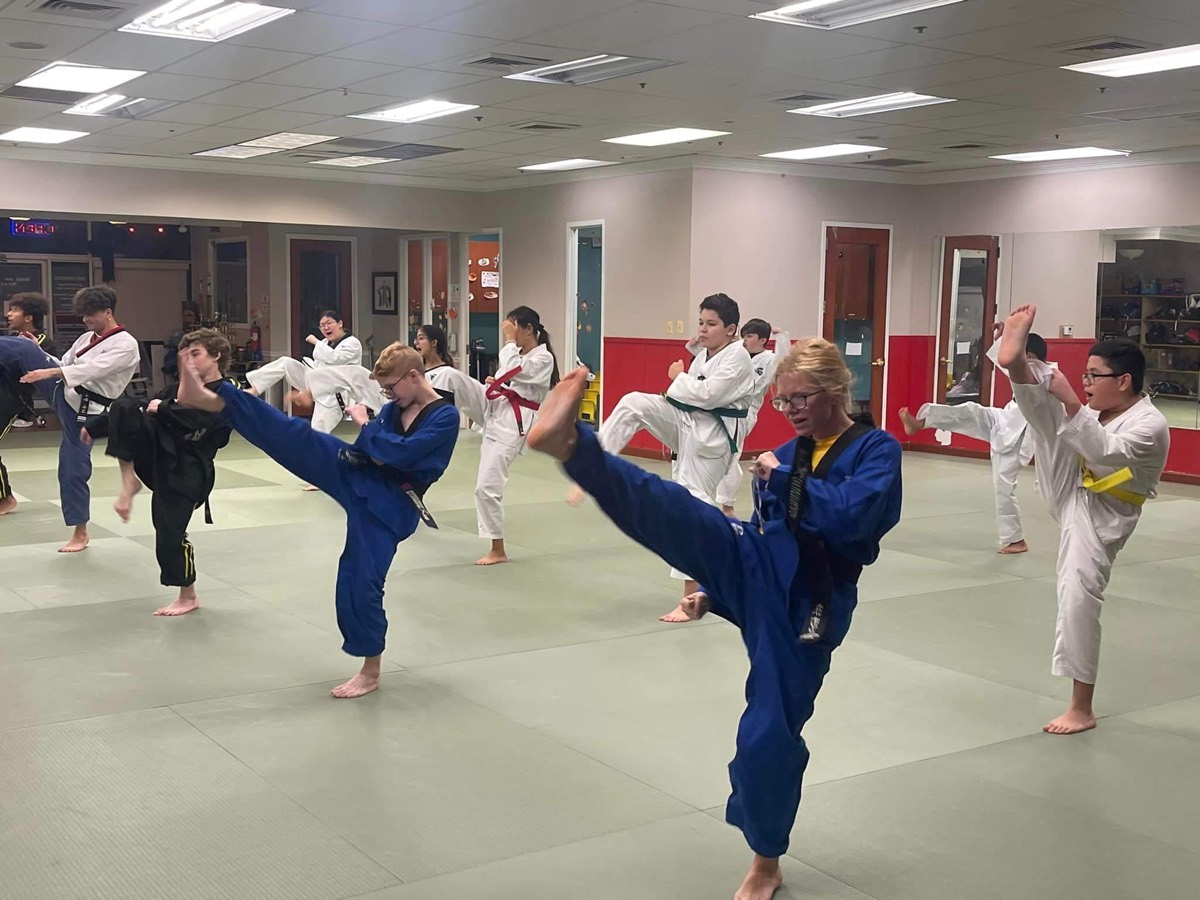
Most Taekwondo and many traditional martial arts classes train barefoot on mats. That’s partly tradition, but it’s also practical: mats are cleaned for bare feet, and shoes bring in grit that tears up flooring and skin.
Bring shoes you can slip on and off easily for the walk in and out. If you’re in a place that uses shoes (some self-defense programs do), the school will tell you.
One exception: if you have a medical reason you can’t go barefoot, tell the instructor. There are common solutions like clean, mat-only athletic shoes or martial arts slippers, depending on the school’s policy.
Pack these three things and you’re set
Keep it simple. A first class shouldn’t require a gear bag the size of a suitcase.
- Water bottle. Even a short class can feel warm once you start moving. The U.S. Office of Disease Prevention and Health Promotion hydration guidance gives the plain version: drink when you’re thirsty and pay attention to heat and activity.
- Small towel (optional). Especially for teens and adults. A hand towel is enough.
- Hair ties. If hair can fall into eyes, it will. Bring one extra.
If your child is young, add one more item: a simple snack for after class, not during. Some kids walk out starving.
And yes, bring a light layer for the lobby. Training floors can be warm while waiting areas are chilly.
Skip these common outfit mistakes (they cause real problems on the mat)
A few clothing choices create the same issues over and over. Here’s what to avoid and why.
- Jeans or stiff pants. They restrict kicking and can split. Also, denim seams can rub skin when you’re repeating moves.
- Skirts or dresses. Even if they have leggings under them, they ride up and distract the student.
- Clothes with zippers, metal buttons, or big belt buckles. Hardware scratches partners and the mat.
- Jewelry and watches. Rings and bracelets get caught. Earrings get pulled. Many schools follow the same basic “remove jewelry for sports” reasoning you’ll see in youth sport safety recommendations like the American Academy of Pediatrics Council on Sports Medicine and Fitness materials.
- Long, sharp nails. They’re a surprisingly common source of accidental scratches.
My unhedged take: don’t buy a uniform before the first class.
It’s wasted money if the schedule or teaching style isn’t right for your family. Try the class first, then buy what that school actually uses. If you’re weighing budget along with everything else, it may help to look at how much martial arts costs for kids over a full year.
Use this quick table to decide what’s “good enough”
| Item | Good choice for day one | Why it matters |
|---|---|---|
| Pants | Joggers, sweats, leggings, basketball shorts | Lets you lift knees and kick without pulling or ripping |
| Top | T-shirt, athletic top | Comfortable, breathable, no snagging |
| Footwear | Slip-on shoes for arrival, bare feet on mat (unless told otherwise) | Protects the mat and helps traction and balance |
| Accessories | None, or a simple hair tie | Reduces scratching and finger-catching |
If your clothes meet the “good choice” column, you’re fine. Nobody’s grading your outfit.
What to wear for different first-class situations
The right outfit changes a little depending on the kind of class and the age of the student.
If it’s a kids’ class (age 4 to 7)
Choose clothes your child can manage alone in the bathroom.
That means elastic waistbands and simple layers. Little kids get nervous when they can’t fix their own pants quickly.
- Elastic-waist pants or shorts
- T-shirt that isn’t too big
- No buttons, no belts, no overalls
If your child has sensory sensitivities, check seams and tags ahead of time. A scratchy tag can ruin the whole class, even if everything else goes well. If you’re not sure they’re ready yet, you can look for signs your child is ready for martial arts class before you schedule a trial.
If it’s a teen class
Teens usually worry most about looking awkward.
Dark athletic clothes help many teens feel less “on display,” and they don’t show sweat as quickly. A fitted base layer under a T-shirt can also help self-conscious beginners feel covered without overheating.
If it’s an adult class
Wear the same gear you’d wear to a gym workout. The big difference is footwear: many martial arts schools train barefoot, so bring socks for the lobby and expect to take them off on the mat.
If you’re coming straight from work, pack a change of clothes. Training in office pants is miserable.
When the standard advice doesn’t apply (and what to do instead)
Sometimes “T-shirt and sweatpants” isn’t enough. These are common exception cases that deserve a plan.
If your child needs an inhaler, brace, or medical support
Bring it to class and tell the instructor quietly before warm-ups start.
Asthma action plans and quick-relief medication are normal in youth sports settings. The National Heart, Lung, and Blood Institute’s asthma guidance explains the basics of managing symptoms and triggers.
- Inhaler: keep it accessible, not buried in the car
- Knee/ankle brace: wear it if your doctor recommends it, and let the instructor know so drills can be adjusted
- Medical ID: consider it if there’s a serious allergy or condition
If you need more coverage for religious or personal reasons
You can absolutely train modestly.
Look for breathable layers: a long-sleeve athletic shirt under a T-shirt, or track pants instead of shorts. The key is still the same: no hard hardware, no loose fabric that swings into faces, and nothing that limits movement.
If head coverings are part of your practice, ask the school what’s allowed and what’s safest for training. Some sports safety policies focus on avoiding hard clips, pins, or anything that could catch. The reasoning is similar across many athletic settings.
If the class is grappling-heavy (judo, jiu-jitsu, wrestling)
This article is aimed at “first martial arts class” in general, but grappling arts have one extra issue: fingers and toes catch on loose fabric.
For a grappling trial class, tighter athletic clothing usually works better than baggy sweatpants. Some schools require a gi, but many will let you try once in athletic wear. If you’re unsure, call ahead and ask what’s typical for a trial class.
Uniforms, patches, and credentials (what they mean, and what they don’t)
Once you stick with classes, you’ll probably be offered a uniform. In Taekwondo, that uniform is often called a dobok. Different organizations have different uniform styles and belt systems.
If you hear “Kukkiwon,” that refers to the World Taekwondo Headquarters in Seoul. Kukkiwon is described as Taekwondo’s central institution and highest technical authority, and it serves as headquarters for the World Taekwondo Academy, according to Wikipedia’s Kukkiwon article. It also operates under the supervision of South Korea’s Ministry of Culture, Sports and Tourism, which means it’s government-supervised rather than a private federation, per the same source.
What that means for a parent: a credential can tell you a school follows a known technical standard and testing structure. It doesn’t guarantee your child will love the class, and it doesn’t make a school without that specific credential “bad.” If you’re comparing programs, it can help to know what Kukkiwon certification actually means for a Taekwondo black belt.
Dynamic Kick Martial Arts is Kukkiwon, World Taekwondo, and USA Taekwondo accredited, and we’ve been teaching families in Northern Virginia since 2000. If you’re comparing schools, ask any program you visit what organization they certify through and what that changes for students day-to-day. You can also use a structured approach for how to choose a martial arts school for your child so you’re not guessing.
Your first class will go better if you do this one small thing
Lay the clothes out the night before.
That’s it.
For kids, it reduces the pre-class scramble that turns into tears in the car. For adults, it removes the “what am I going to wear?” spiral at 5:30 pm when you’re already tired.
If you’re still unsure, call the school and ask, “What do most beginners wear for the first class?” A normal school will answer in ten seconds, because they’ve answered it a hundred times.
Sources
- CDC injury prevention resources (Centers for Disease Control and Prevention)
- Hydration guidance for staying active (U.S. Office of Disease Prevention and Health Promotion, Health.gov)
- Council on Sports Medicine and Fitness (American Academy of Pediatrics)
- Asthma guidance (National Heart, Lung, and Blood Institute)
- Wikipedia’s Kukkiwon article (Wikipedia)