
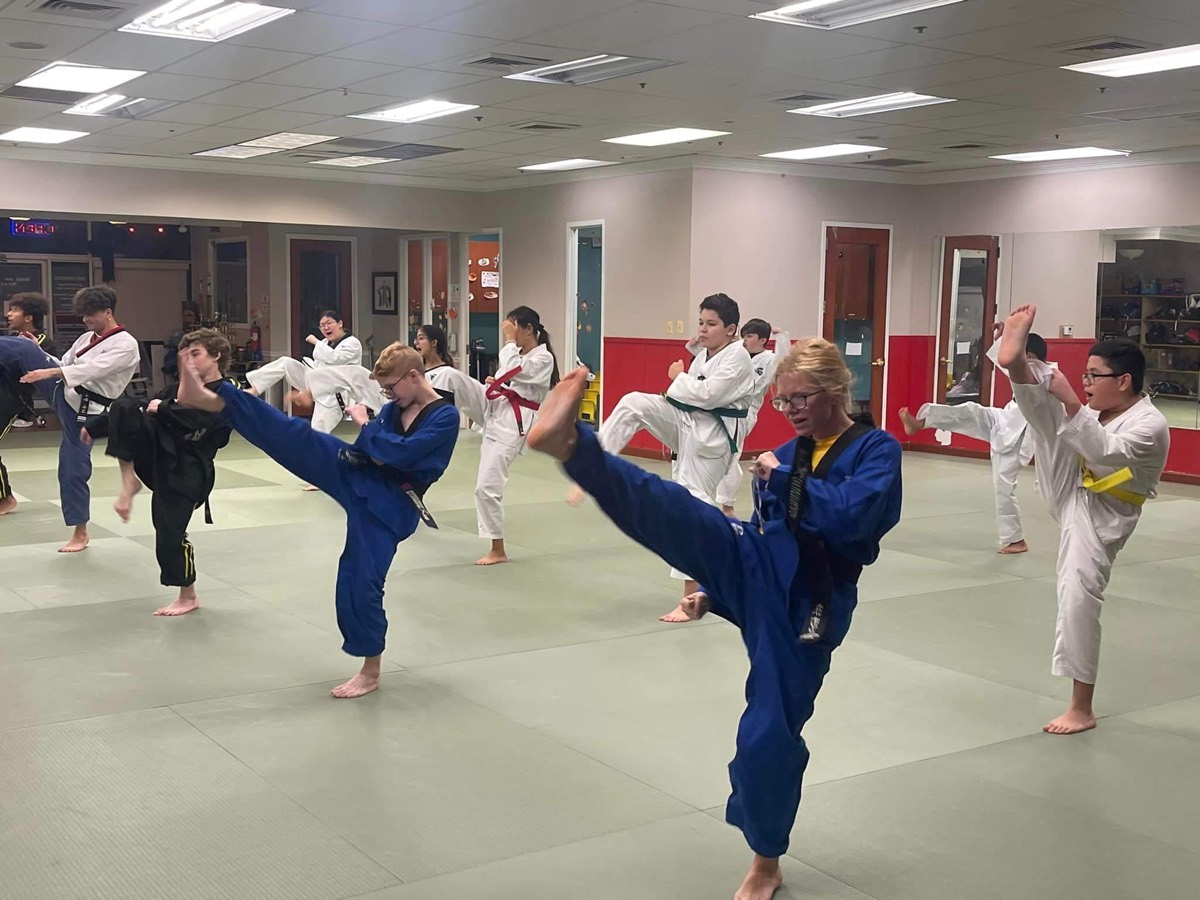
Most kids’ martial arts programs land somewhere around $100 to $250 per month, but the real cost depends on how many classes you’re getting, whether it’s a month-to-month plan or a longer membership, and what’s included (uniforms, testing, gear, extra events). The fastest way to compare schools isn’t the sticker price. It’s cost per attended class, plus the “surprise” fees that show up later.
If you’re a nervous parent trying to budget, you’re not alone. We hear this question constantly, and the honest answer is: two schools can both charge $175 a month and be wildly different deals.
Here’s how to estimate your real monthly cost before you sign anything.
What you’re actually paying for (and what should be included)
When a parent asks, “How much does martial arts cost for kids?” they usually mean “What will this do to my monthly budget?” But tuition isn’t the only line item. A fair comparison is what you pay to get a safe class, a clear curriculum, and enough reps each week for your child to actually improve.
In most schools, tuition pays for instruction time, a structured curriculum, and access to a set number of weekly classes. It also pays for staffing, rent, and safety policies like background checks. If a school offers after-school pickup or transportation, that’s a different cost structure and it usually changes the price.
Common cost categories you’ll see
- Monthly tuition (the main recurring cost)
- Enrollment or registration fee (often one-time, sometimes annual)
- Uniform (dobok/gi), patches, belt
- Testing or promotion fees (for new belts)
- Protective gear (gloves, foot pads, mouthguard, headgear for sparring)
- Special events (tournaments, demos, camps)
A quick gut-check: if a school’s monthly price seems low, ask where they make it up. Sometimes it’s totally reasonable. Sometimes it’s “death by a thousand fees.”
And yes, your child’s age matters. A 4-6-year-old program is often priced differently because class length, staffing ratios, and expectations are different from a teen program.
If you’re trying to line up costs with real health value, regular activity is part of the point. The CDC’s physical activity guidance for children and adolescents recommends 60 minutes a day of moderate-to-vigorous activity, including muscle- and bone-strengthening activity at least 3 days a week (CDC physical activity guidelines for kids). Martial arts can help cover that, but only if your child attends consistently. That’s why cost per attended class matters so much.
A simple way to compare schools: cost per class (plus the “fee traps”)
Here’s the clearest method I know, and most price-shopping guides skip it.
Ignore the monthly price at first. Ask two questions: “How many classes per week does my child realistically attend?” and “What is the total cost in the first 90 days?”
Step 1: Estimate realistic attendance
- Age 4-6: often 1-2 classes/week is realistic for many families; this is also the range where parents ask about the best age to start martial arts.
- Ages 7-12: 2 classes/week is common, 3 if your schedule is calm
- Teens: 2-4/week if they’re motivated and schoolwork allows it
Be honest. If you know Tuesdays are chaos, don’t buy a plan assuming three Tuesday classes a month.
Step 2: Do the math (an example)
- $180/month and your child attends 2 classes/week
- That’s about 8 classes/month
- $180 ÷ 8 = $22.50 per class
Now compare that with a “cheaper” place: $140/month but your child can only make 1 class/week because of their schedule. That’s about 4 classes/month, or $35 per class.
Same kid. Different deal.
Step 3: Add the 90-day “true cost”
Ask for the full first-90-days cost in writing, including any uniform, registration, and testing fees. Consumer protection basics matter here, and Virginia’s Office of the Attorney General has guidance on shopping for health clubs and memberships, including reading the contract carefully and understanding cancellation terms (Virginia OAG consumer tips on health clubs).
Fee traps to watch for:
- Testing required on a fixed schedule (even if your child isn’t ready)
- “Leadership” or “black belt club” add-ons presented as the normal path
- Uniform and gear requirements that force you into one vendor at marked-up prices
- Long contracts with strict cancellation rules
One sentence that should never make you feel bad: “Can I take this home and read it?” If they don’t like that question, that tells you something.
Typical price ranges and what changes the price
Prices vary a lot by region. Northern Virginia is a high-rent area, so tuition tends to sit toward the higher end of the national range. But even within the same zip code, pricing changes based on what the school includes and how it runs classes.
Here are common pricing models you’ll see, with the practical pros and cons.
| Pricing model | What it usually looks like | Good fit if… |
|---|---|---|
| Month-to-month | Higher monthly price, easiest to stop | You’re testing if your child likes it |
| 6-12 month membership | Lower monthly price, commitment required | Your schedule is stable and your child is motivated |
| Paid-in-full package | Lowest effective monthly cost, biggest upfront spend | You’ve done martial arts before and know what you want |
| After-school pickup program | Tuition plus transportation and supervised time | You need childcare coverage, not just a class |
What tends to raise the price (often for good reasons):
- More class options per week (more flexibility, more staff hours)
- Smaller class sizes or more assistants on the floor
- Programs that include supervised time before or after class
- Clear safety rules and structured contact progression, especially for sparring
What doesn’t automatically justify a higher price:
- A flashy lobby
- A long list of “free” add-ons that your family won’t use
- A promised belt timeline that sounds too tidy
If the school does Taekwondo, you can also ask about their connection to recognized governing bodies. For example, Kukkiwon is the World Taekwondo Headquarters and sets standards for Dan (black belt) certification (Kukkiwon (World Taekwondo Headquarters)). That doesn’t mean every good school must do it, but it’s a concrete credential you can verify.
Hidden costs you should plan for (uniforms, testing, gear, tournaments)
Most families don’t mind paying for martial arts. They mind being surprised.
So let’s talk about the common add-ons, what’s normal, and what should make you ask questions.
Uniforms
Many schools require a uniform. That’s normal. Ask:
- How many uniforms does a child typically need?
- Are there different uniforms for different levels?
- Can we buy a uniform from you and keep using it, or do we have to upgrade often?
Promotion and testing fees
Some schools charge a testing fee when a child goes up in belt rank. Others roll that cost into tuition. Either approach can be fine, as long as it’s transparent.
Two things to listen for:
- How often testing happens (and whether it’s optional)
- What “ready to test” means in plain language
For Taekwondo specifically, if a school claims black belts are internationally recognized, ask what that means. In Kukkiwon-style Taekwondo, Kukkiwon Dan certification issues Dan certificates (black belt ranks) under its standards (Kukkiwon Dan certificate information). You don’t need to be a Taekwondo expert to ask that question. You just need a straight answer.
Sparring gear
Gear costs vary, and not every kid spars right away. If sparring is part of the program, ask for the required list and when it kicks in. In sport Taekwondo, rules and protective equipment are tied to safety and fairness, and you can see the equipment standards through recognized bodies like USA Taekwondo (USA Taekwondo).
Tournaments and events
Tournaments can be great for some kids and miserable for others. They usually come with entry fees, travel, and sometimes coaching fees.
My blunt opinion: tournaments are optional for most kids, and a school shouldn’t treat them like a requirement for “serious” students.
If your child loves performing and competition, great. If they don’t, they can still become confident, disciplined, and skilled through regular classes and steady goals.
Is this right for your family? When the cost is worth it, and when it’s not
Martial arts is a great fit for many kids. It’s not a fit for every family at every moment.
This section is here because a trustworthy answer has boundaries.
It’s usually worth the cost if…
- Your child will attend at least once a week, ideally twice
- You can picture your child sticking with it for 6-12 months, not 6 weeks
- You want coaching in listening, focus, and respectful behavior, not just “burn energy”
- The school can explain its safety approach clearly
Consistency is where the value shows up. Skills build in layers.
It might not be worth it right now if…
- Your schedule is so packed that attendance will be random
- You’re hoping for a quick fix for big behavior struggles at home
- Your child is anxious about group settings and needs a smaller on-ramp than the school offers
- The contract terms make you uneasy
Martial arts can support confidence and self-control, but it’s not therapy, and it won’t replace an evaluation when a child needs one. If you’re concerned about attention, behavior, or anxiety, your pediatrician is a good starting point. The American Academy of Pediatrics has practical guidance on children’s mental health and when to seek help (AAP HealthyChildren.org guidance on emotional and behavioral concerns).
Questions I’d ask any school before paying
- What’s the total cost for the first 90 days, including uniform and any fees?
- How many classes per week is my child allowed to attend on this plan?
- How do you handle a child who’s overwhelmed or acting silly in class? This is also where you can share any signs your child is ready for martial arts class.
- When does sparring start, and what safety steps happen before that?
- How do promotions work, and what does “ready” look like?
- What’s your cancellation policy, and can I have it in writing?
A good school won’t rush these answers.
How to get a clear price quote (and a calmer first month)
If you want the cleanest numbers, ask for a written breakdown in two columns: recurring monthly costs and one-time or occasional costs. Then decide what you’re comparing: the cheapest monthly bill, or the best routine for your child.
One practical trick: plan the first month like a trial even if the school doesn’t label it that way. Pick two class days and protect them on the calendar. Pack the uniform the night before. Keep post-class snacks in the car. Remove friction.
If you’re in Northern Virginia and looking at Taekwondo specifically, Dynamic Kick Martial Arts has been teaching since 2000 across Gainesville, Fair Lakes, Lansdowne, Lorton, and Kings Park West, and our black belt certification is Kukkiwon-accredited. That accreditation matters mainly for one reason: if your child eventually earns a black belt, it’s tied to a standard that’s recognized outside a single school (Kukkiwon).
Your next step is simple. Get the full 90-day cost in writing from any school you’re considering, estimate realistic attendance, and calculate cost per class. Then pick the place that feels steady, safe, and sustainable for your family.
Sources
- CDC physical activity guidelines for kids (Centers for Disease Control and Prevention)
- Virginia OAG consumer tips on health clubs (Office of the Attorney General of Virginia)
- Kukkiwon (World Taekwondo Headquarters) (Kukkiwon)
- Kukkiwon Dan certificate information (Kukkiwon)
- USA Taekwondo (USA Taekwondo)
- AAP HealthyChildren.org guidance on emotional and behavioral concerns (American Academy of Pediatrics)