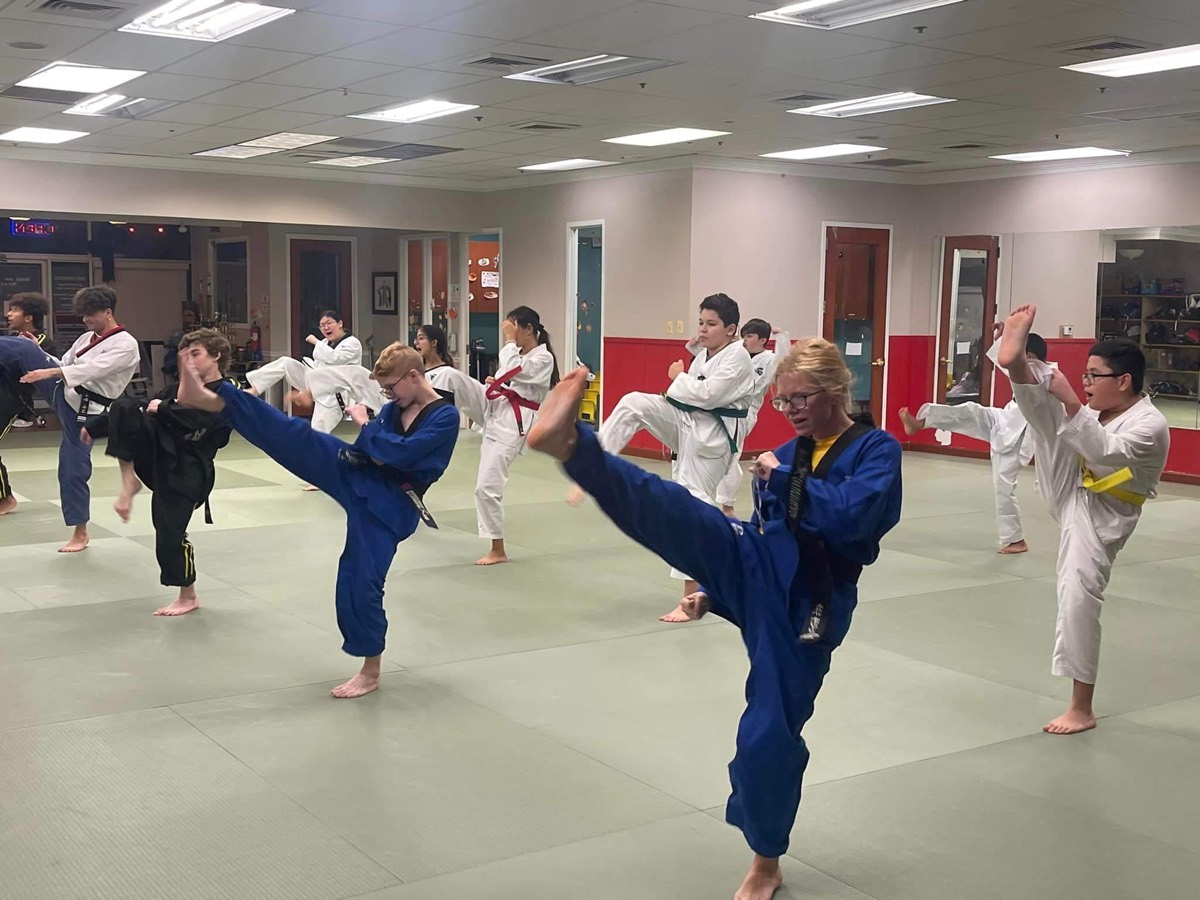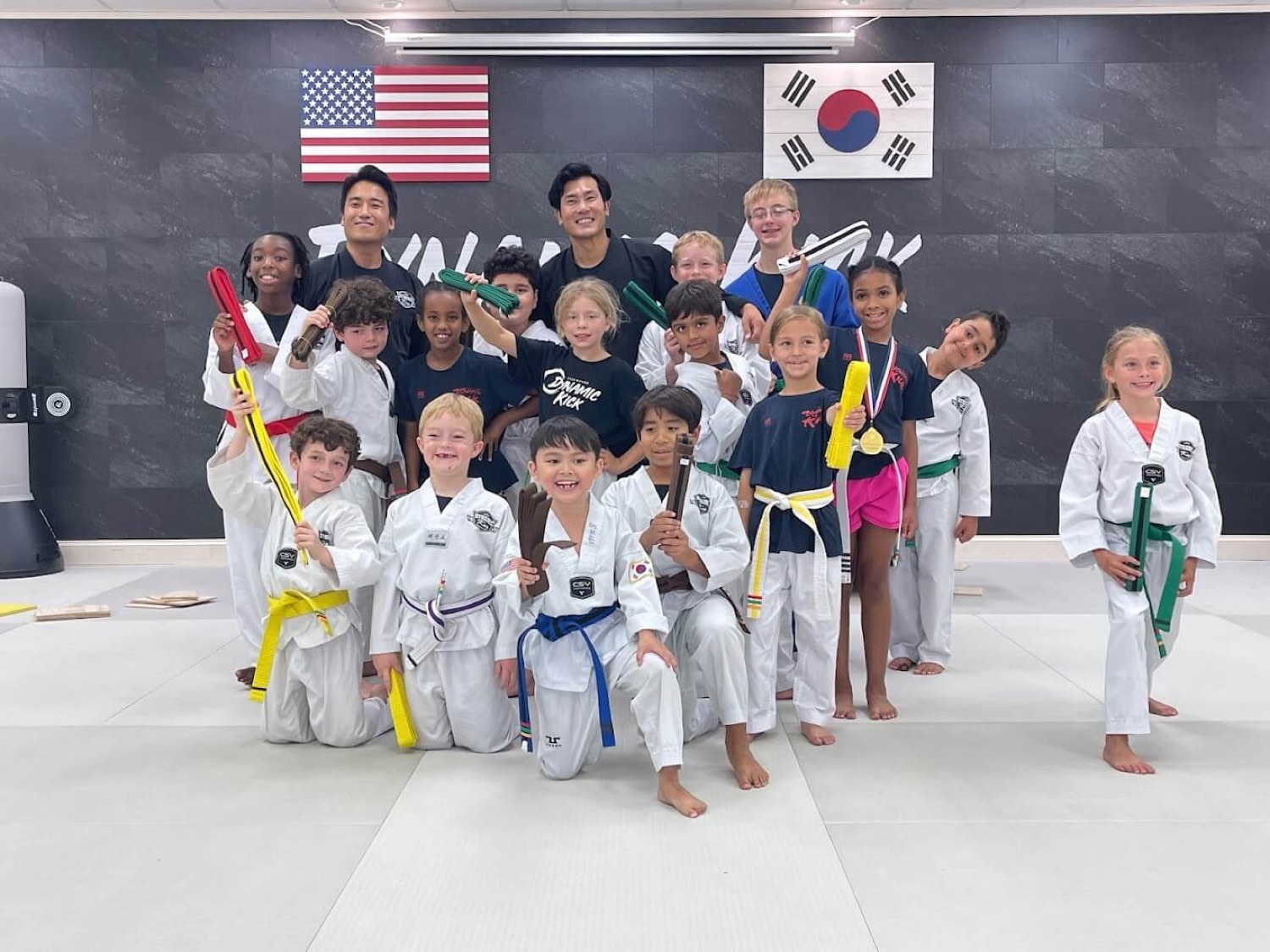
Training Taekwondo with your child in a family class works best when you treat it like a shared weekly habit, not a test of who’s “better.” You’ll make faster progress if you pick two or three simple goals, agree on at-home expectations, and let your child own their effort. The real win is steady practice together, even on messy days.
Why family classes feel harder than they look
Most parents come in with a good idea: “We’ll do this together, and it’ll be great for both of us.” Then the first few classes feel awkward. Kids compare themselves to you. You compare yourself to your kid. Someone gets frustrated, and now the drive home is tense.
The cause usually isn’t motivation. It’s role confusion.
At home, you’re the grown-up who fixes problems. In a family class, your child is learning to solve problems with their own body and brain. If you step in too fast, you accidentally teach them that they can’t do it without you.
Family classes also expose a basic truth: kids learn differently than adults. Children often copy fast, then forget fast. Adults usually need more reps to start, but we remember patterns once they click. That difference is normal, and it can be helpful if you expect it.
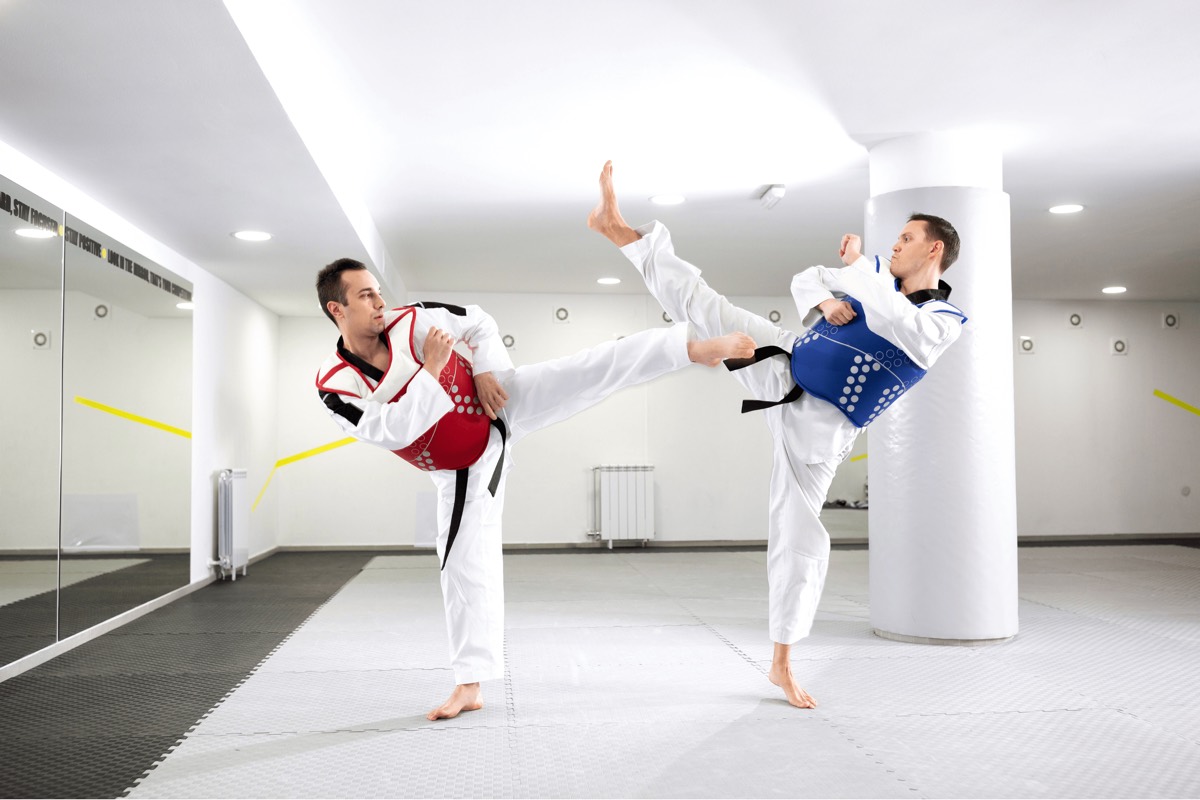
If your family class includes sparring or contact drills, it helps to know that Taekwondo is a contact sport and injuries can happen in any athletic activity. The American Academy of Pediatrics puts martial arts under “contact or collision sports,” and they recommend the right supervision and safety rules for age and setting, not blanket fear of the sport. See the AAP guidance on sport-related concussion in children and adolescents.
Start with a parent-child agreement, not a pep talk
Do this before you ever worry about belts, forms, or how high someone can kick.
A short agreement prevents most family-class friction because it sets the ground rules for how you’ll act when one of you struggles.
Keep it to three rules you can follow
- We don’t coach each other during class unless the instructor asks.
- We both try, even when we’re not in the mood.
- We talk about class after, but we don’t use the car ride to argue.
That’s it. Three is enough.
We’re opinionated on this: parents should not correct their child on the mat.
Even when you’re right, it usually lands as pressure, not help. Let our instructors coach. Your job in a family class is to model effort, respect, and staying calm when you make mistakes.
If you want a simple way to keep yourself honest, pick one phrase you’ll use when your child gets stuck: “Keep going, you’ve got time.” Then stop talking.
For families who want a little structure around habits and routines, the CDC’s parent-facing guidance on children’s sleep is a good reminder that mood and focus change a lot when sleep slips. See the CDC’s sleep guidance for children.
Use our three-lane method to make family training smoother
In a family class, everyone is in the same room, but you’re not all working on the same thing at the same level. When families struggle, it’s usually because they expect to “match” each other. You don’t need that.
We teach families to think in three lanes. It keeps expectations realistic, and it makes progress visible.
| Lane | What it looks like in class | What you track at home |
|---|---|---|
| Basics lane | Stances, blocks, simple kicks, how to stand in line | One basic you both practice for 2 minutes |
| Skill lane | Forms, combinations, target work, timing | One “sticky” skill your child chooses |
| Character lane | Listening, effort, respectful partner work | One behavior goal, like “reset fast after mistakes” |
Adults tend to focus on skill lane. Kids often need basics lane and character lane to stay steady.
Pick one lane per week as your focus, not all three at once. You’ll feel calmer, and your child will feel less watched.
If you’re tempted to measure progress by “who learns faster,” don’t. That comparison has no upside, and it damages the one thing you actually need: both of you showing up again next week.
Make at-home practice short, specific, and tied to a real cue
Most families don’t need more willpower. They need a smaller practice plan.
At home, the best practice is boring on purpose. Two to six minutes is plenty, as long as it’s consistent.
A simple plan you can run on school nights
- Pick a cue. Right after brushing teeth, right before shower, right when you get home.
- Set a timer for 3 minutes.
- Do 10 slow reps of one basic, then stop.
Stop while it’s still easy. That’s how you make tomorrow possible.
If you want your child to practice without a fight, give them one choice: “Do you want to practice front kick or round kick?” You’re choosing practice. They’re choosing the flavor.
Also, don’t turn practice into punishment. If your child misbehaves, handle that as parenting. Practice stays practice.
For younger kids, short sessions match what child development experts recommend for attention and learning. The American Academy of Pediatrics’ general guidance on healthy development emphasizes predictable routines and positive reinforcement over punishment-based systems. See AAP HealthyChildren on positive parenting.
How to handle the two moments that derail most families
Family classes don’t fall apart during the good days. They fall apart in two predictable moments.
When your child melts down because you’re watching
Some kids get more upset in front of a parent, not less. That doesn’t mean they’re not ready for martial arts.
- Stand in the same spot every class so your child knows where you are.
- Keep your face neutral during corrections.
- After class, ask one question: “What was the hardest part today?” Then listen.
If your child needs space, it can help for you to partner with someone else when the instructor allows it. Kids often reset when they’re not trying to “perform” for you.
When you get frustrated because your body doesn’t move like it used to
This one surprises a lot of adults. You come in to support your kid, and suddenly you’re the beginner again.
That’s not a problem. It’s the point.
When your child sees you learn in public, they get permission to struggle without shame. That lesson is bigger than any kick.
If soreness is part of your return to exercise, stick to gradual increases. The American College of Sports Medicine’s general recommendations for physical activity emphasize building up over time rather than doing too much too soon. See ACSM’s physical activity recommendations.
When family class is not the best fit right now
Family class is a great option for many households. It’s not the right answer for every season.
Here are the cases where we usually suggest families consider separate classes, at least for a while.
- Your child listens well with instructors but pushes back harder when you’re in the room. Some kids need a little independence to grow.
- You’re trying to use class as a fix for behavior at home. Martial arts can support good habits, but it can’t replace consistent boundaries.
- You want a harder workout than your child’s pace allows. Adults progress better when they can focus, sweat, and stay in their lane.
- A sibling dynamic makes class tense. If one child constantly compares or distracts, separate classes can reduce conflict.
Choosing separate classes isn’t quitting on family training. It can be the more respectful choice for everyone’s learning style.
There’s also a safety angle. If emotions run hot, partner drills become messy. A calmer setup is safer and more productive. For a broader overview of how risk varies by sport and how safety culture matters, see the National Athletic Trainers’ Association resources on sport injury prevention.
What to look for in a family Taekwondo program in Northern Virginia
If you’re comparing options, skip the marketing claims and look for the practical stuff that shapes your week.
Ask these five questions before you commit
- How do instructors handle mixed ages and mixed skill levels in one room?
- Do they have clear rules for contact, partner work, and control?
- What’s the plan for beginners so they don’t feel lost for the first month?
- Is there a way to verify rank outside the local school if you move later?
- Can your family switch between family class and age-based classes if needs change?
That fourth question matters more than most families realize. Kukkiwon issues certificates centrally and provides a certificate issuance and lookup service, which means rank can be verified independently of any one local school. See Kukkiwon’s official site. Kukkiwon’s own counters show millions of certificates issued over time, which gives you a sense of scale and why the record can travel with you. See the Kukkiwon main site.
If you want background on what Kukkiwon is, it’s commonly described as the World Taekwondo Headquarters and the central technical authority for Taekwondo. See Wikipedia’s overview of Kukkiwon for a plain summary and history.
How we run family training at Dynamic Kick Martial Arts
In our Northern Virginia schools, we’ve found that families do best when they know what they’re coming in for. We’ve been teaching since 2000, and we keep family training practical: clear structure, patient coaching, and expectations that match real life.
We offer family training alongside age-based options so you can choose what fits right now. If your goal is to train together on the mat, our Family Martial Arts program is built for parents and children training side by side, and each of our locations has its own program page and schedule details. If you’re looking for the closest school, start with our locations page.
For example, families in Fairfax often look at Dynamic Kick Fair Lakes or Dynamic Kick Kings Park West, while families closer to Leesburg often start with Dynamic Kick Lansdowne.
If you want to see whether a family class feels right in your household, book a free first class and try it without pressure at our free trial class page.
Sources
- AAP guidance on sport-related concussion in children and adolescents, American Academy of Pediatrics
- CDC sleep guidance for children, Centers for Disease Control and Prevention
- HealthyChildren positive parenting guidance, American Academy of Pediatrics
- ACSM physical activity recommendations, American College of Sports Medicine
- NATA resources on sport injury prevention, National Athletic Trainers’ Association
- Kukkiwon official site, Kukkiwon
- Kukkiwon main site and certificate counters, Kukkiwon
- Kukkiwon overview, Wikipedia